Verified: updated on
HOT15th
Beijing International Energy Storage Exhibition – Beijing Energy Storage Summit
ESIE
- Dates
- Show Hours:
- Highlights
- A globally leading specialized exhibition and conference for the energy storage industry widely regarded as a barometer of trends in China’s energy storage sector.

Exhibition Data
- 1/1
- Edition
- 200000㎡
- Exhibition area
- 1000
- Exhibitors
- 200000
- Visitors
Beijing City Energy Storage Expo Details
- Organizer:
- Zhongguancun Energy Storage Industry Technology Alliance, Institute of Engineering Thermophysics, Chinese Academy of Sciences
- City:
- Beijing
- Venue:
- Address:
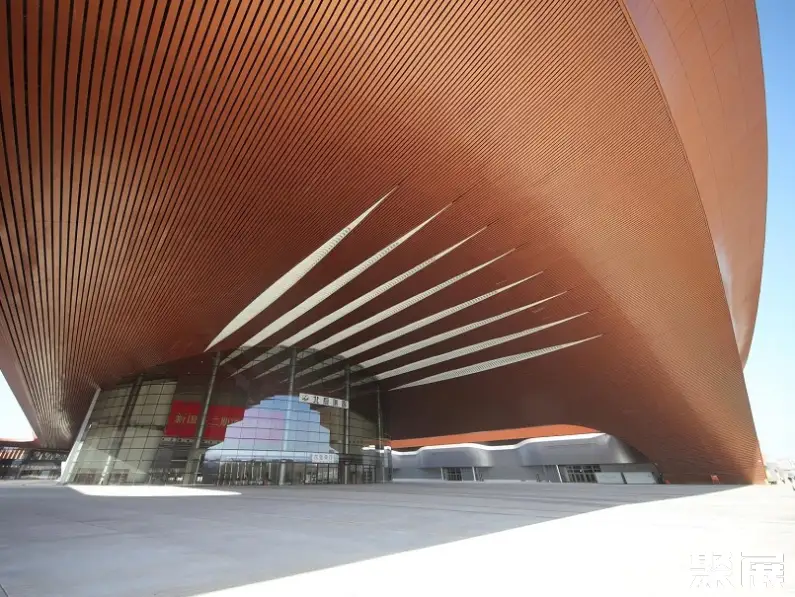
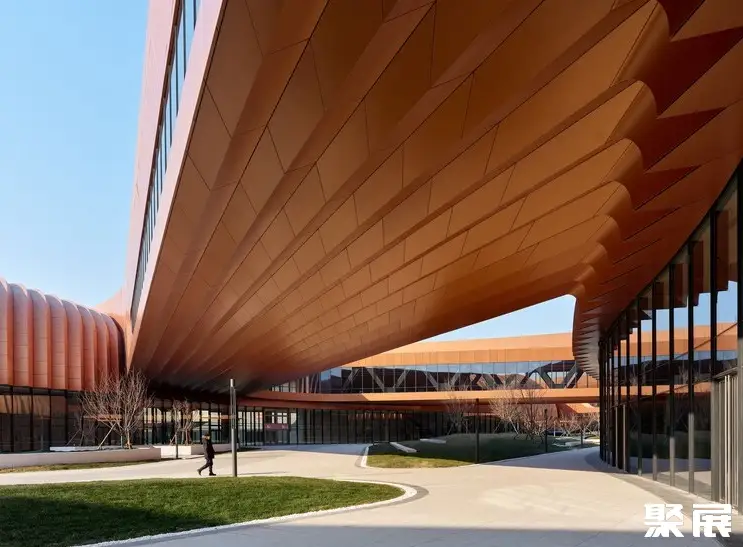
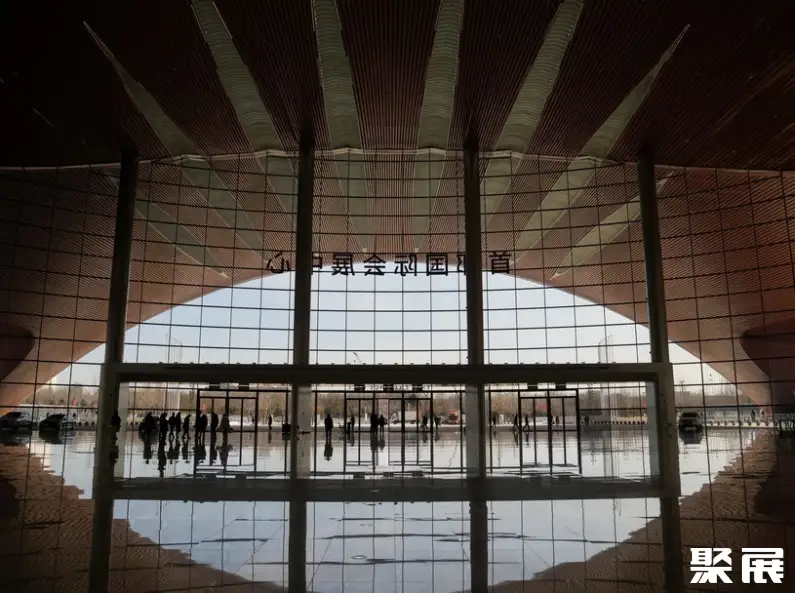
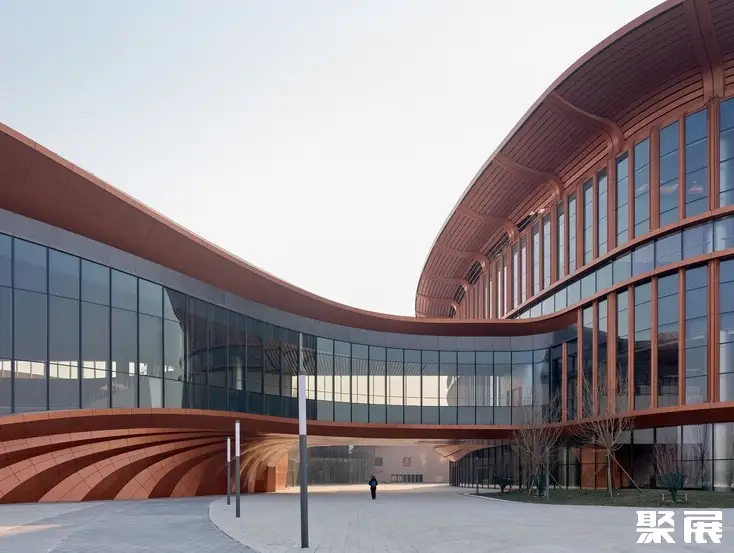
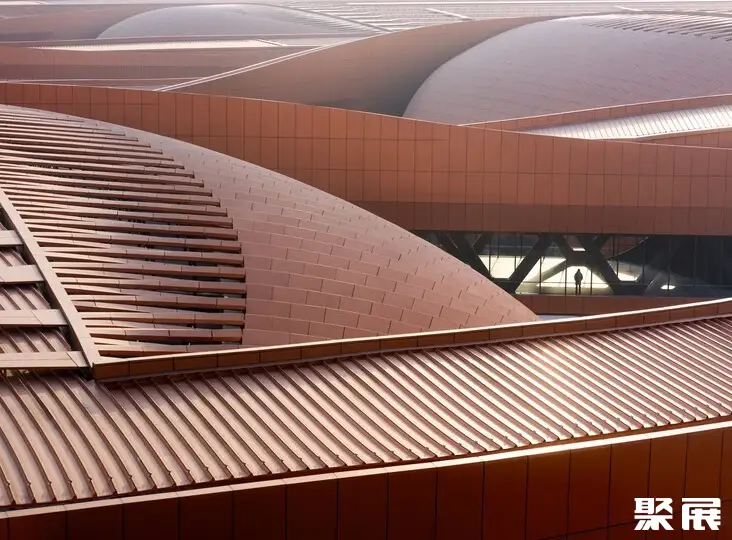
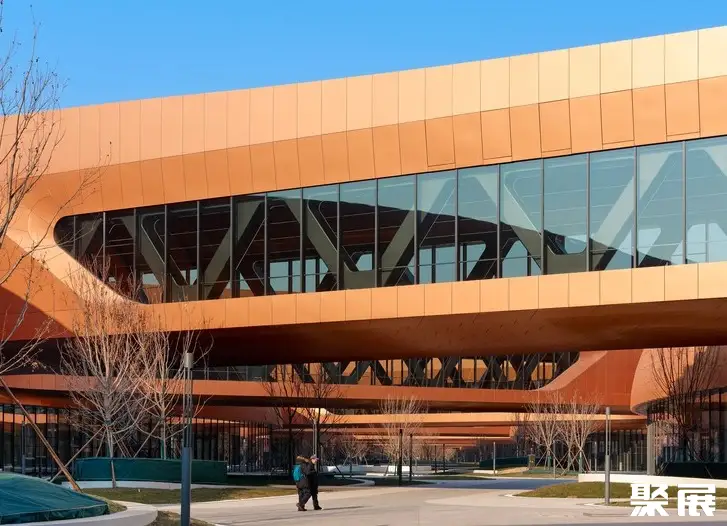
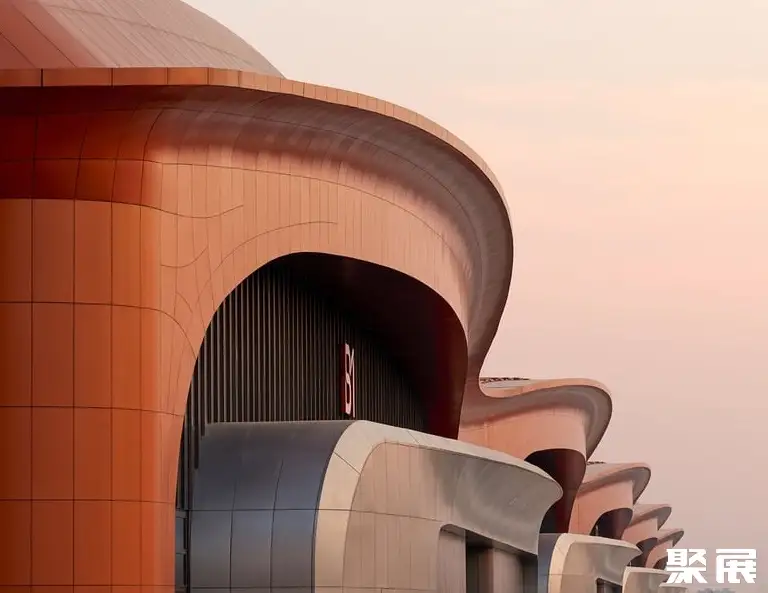
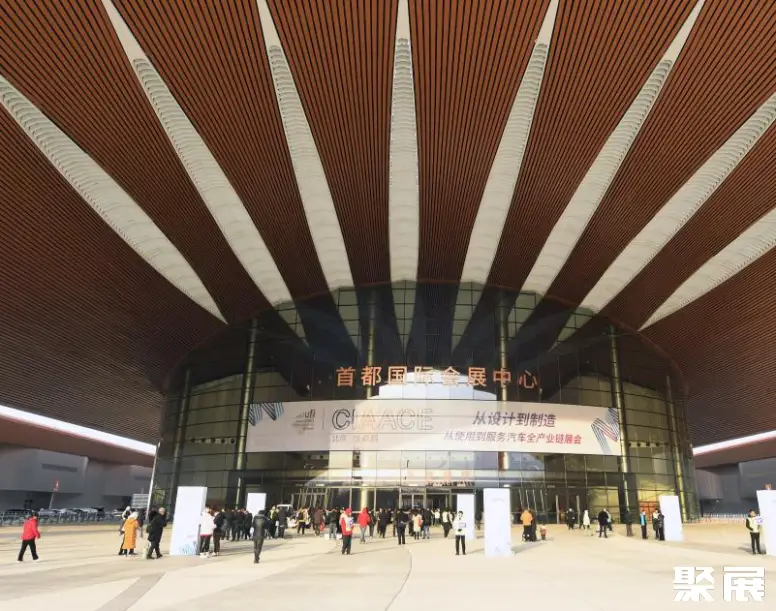
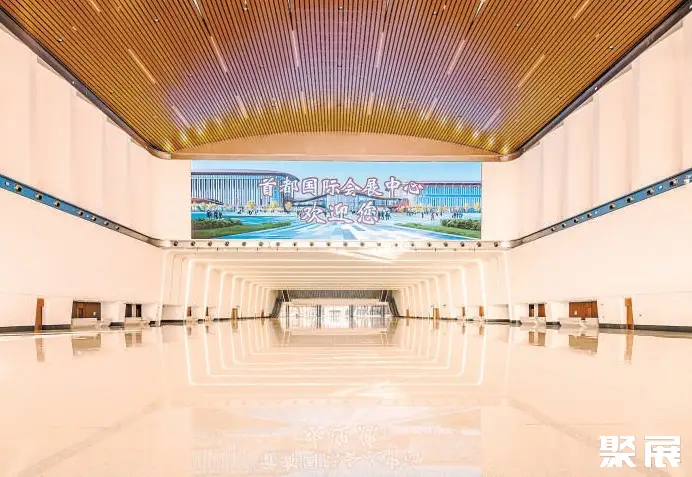
- No. 55 Yuxiang Road, Shunyi District, Beijing
Profile
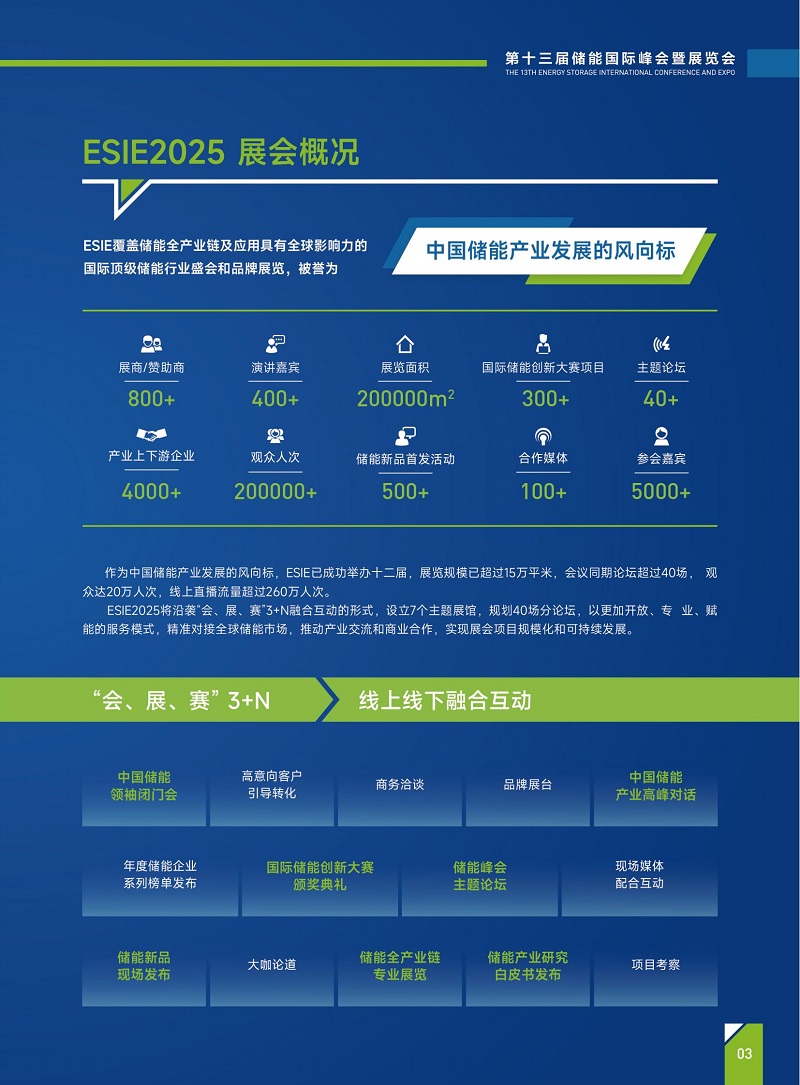
The Beijing International Energy Storage Exhibition—Beijing Energy Storage Summit (ESIE)was established in 2012 with the mission of building a pragmatic and efficient global network for energy storage cooperation and exploring innovative business models. By bridging capital and markets, it has helped foster industry mechanisms and promoted the healthy development of the energy storage sector. ESIE has grown into a leading international trade show brand, serving as one of the most influential platforms for industry dialogue and collaboration in the global energy storage field. It is widely recognized as a high‑profile event that delivers substantial value and robust guidance, acting as a key indicator of trends in China’s energy storage industry.
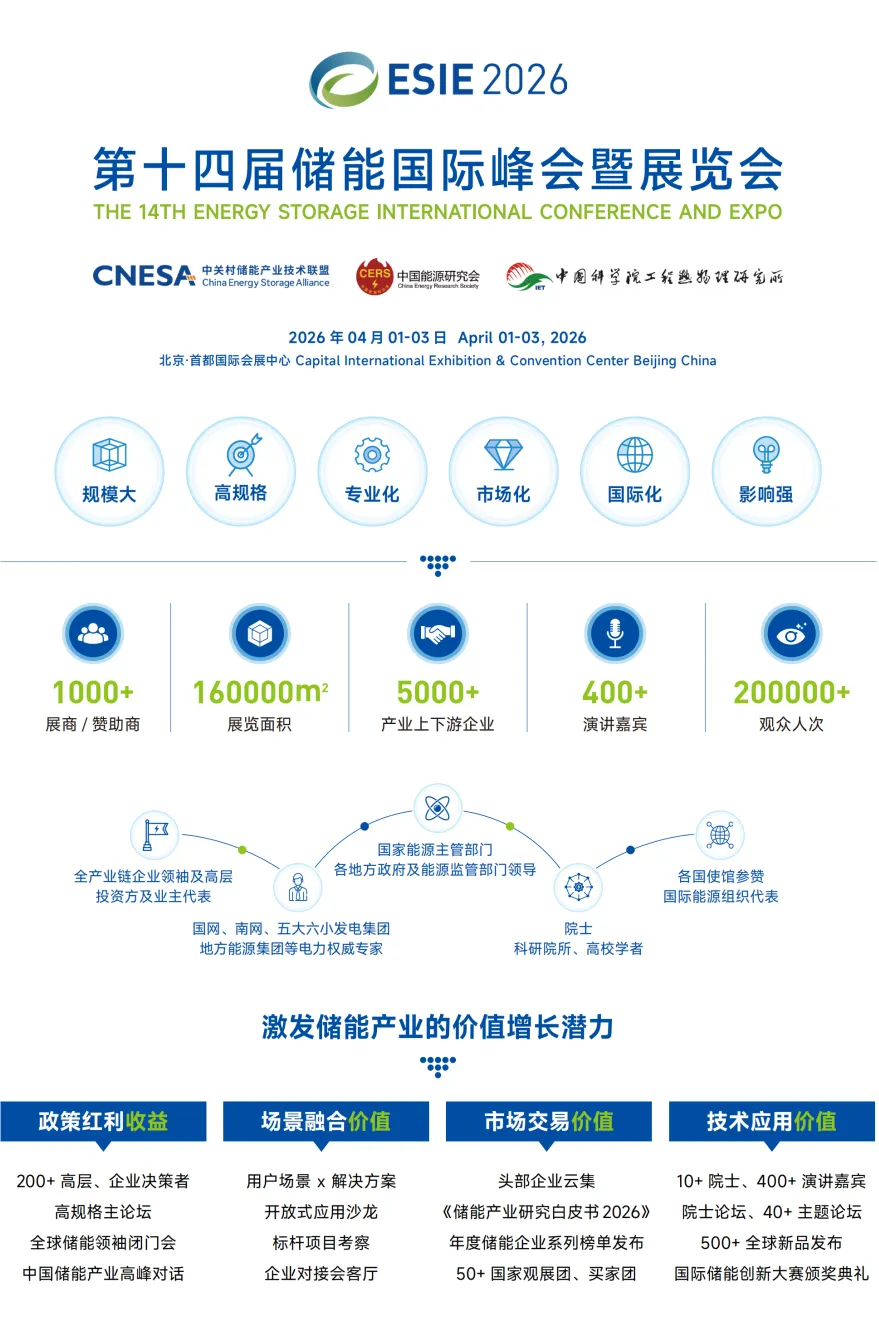
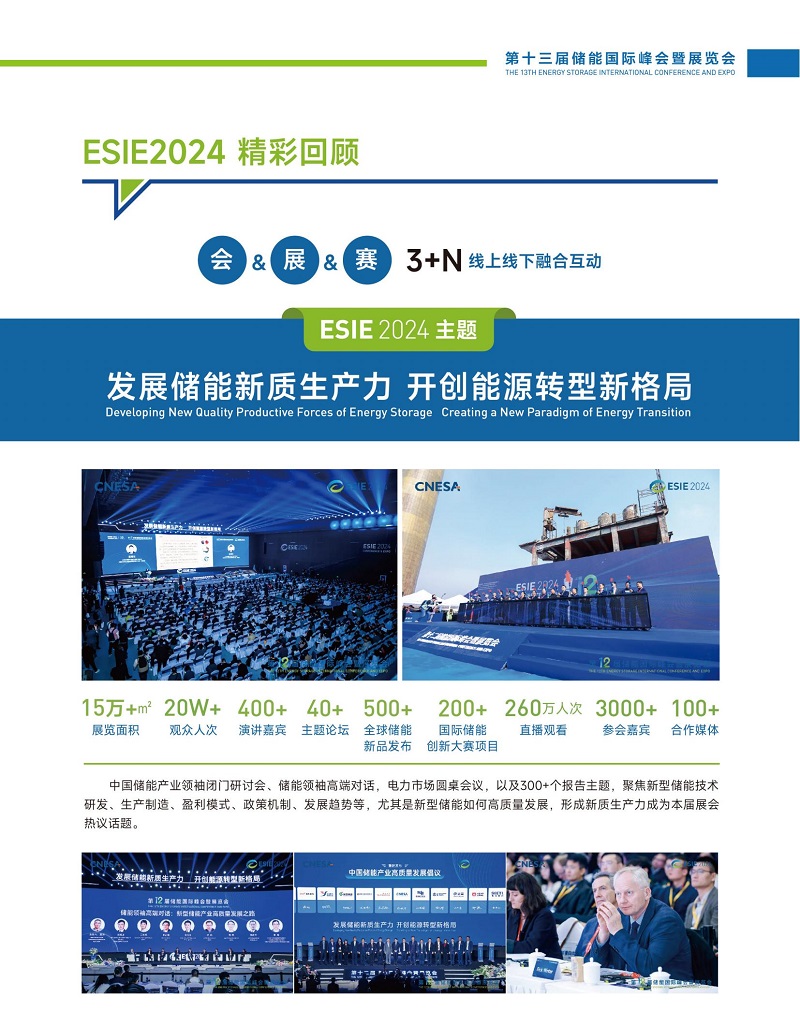
As the industry continues to evolve, this year’s ESIE exhibition boasts an unprecedented scale, featuring 12 thematic pavilions across nearly 150,000 square meters of exhibition space. More than 1,000 leading energy storage companies are participating, alongside over 40 themed forums and special events, with more than 200 showcased projects and presentations by over 400 industry experts. The event is expected to attract more than 200,000 attendees from government agencies, regulatory bodies, research institutes, grid operators, power generation groups, system integrators, energy storage technology providers, ancillary equipment suppliers, and energy service companies—bringing together the entire ecosystem to hear cutting‑edge insights and explore emerging industry trends. This annual gathering is an unmissable highlight for all stakeholders in the energy storage sector.
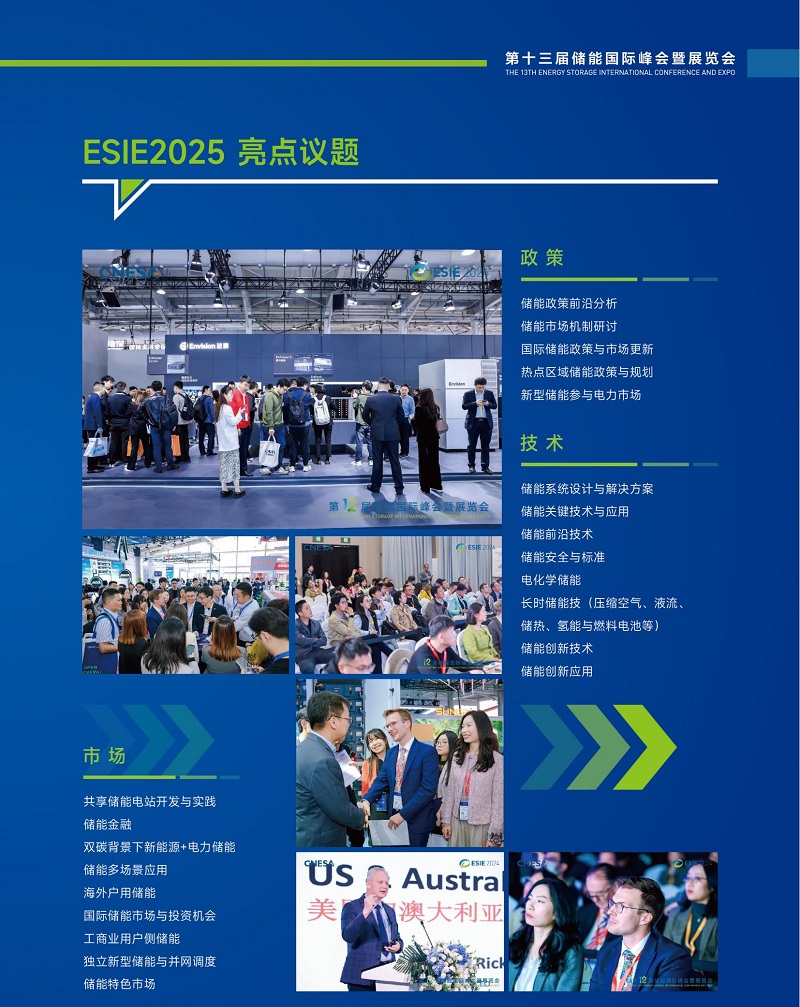
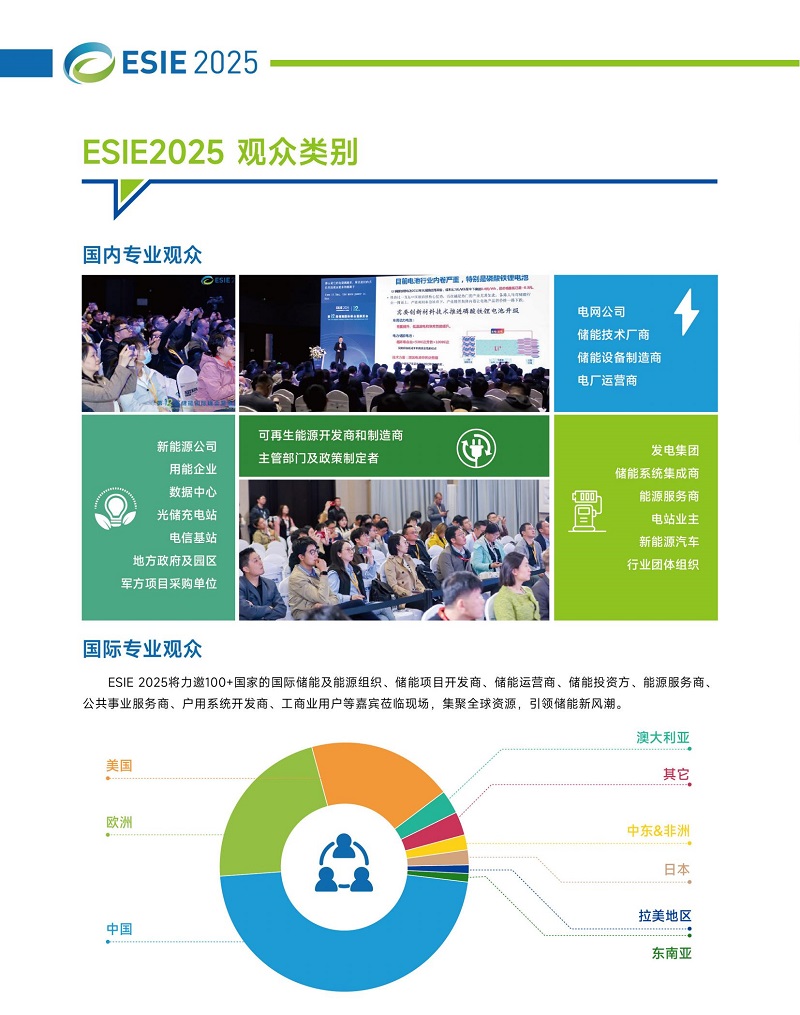
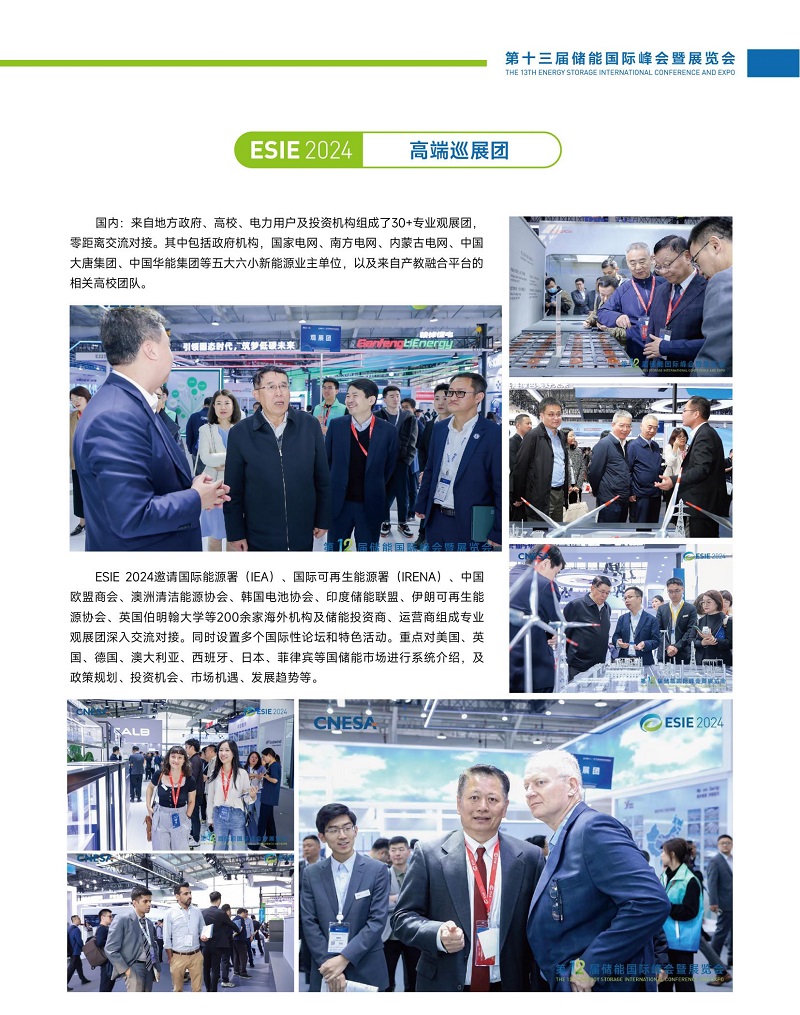
The Beijing International Energy Storage Exhibition—Beijing Energy Storage Summit (ESIE)will host specialized presentations by hundreds of global energy storage leaders from the United States, Germany, Australia, Japan, Canada, India, Europe, and other regions. With an anticipated audience exceeding 10,000 participants, the event will bring together elite representatives from government agencies, regulatory authorities, energy storage firms, research institutions, grid operators, power generation groups, system integrators, and energy service providers.
With stable market expectations now firmly in place, photovoltaic companies, distributed energy providers, power equipment manufacturers, battery producers, and electric vehicle manufacturers are increasingly entering the energy storage space, ramping up their investments and expanding their presence to tap into this burgeoning market while further pursuing profitable business models. To fully leverage policy‑driven incentives, the event aims to accelerate technological advancements, expedite the commercialization of energy storage solutions, and establish comprehensive standards and market mechanisms.
The Beijing International Energy Storage Exhibition—Beijing Energy Storage Summit (ESIE)has, through its expert perspective and far-reaching influence, become one of the world’s premier energy storage trade shows. In particular, its annual opening keynote addresses, high‑level dialogues, and thematic breakout sessions consistently spark lively discussions throughout the industry.(Copyright of this article belongs to Jufair; unauthorized reproduction is prohibited.)
Beijing International Energy Storage Exhibition – Beijing Energy Storage Summit tickets are e-tickets. Mainland China visitors must complete online pre-registration with real-name ID verification; overseas visitors must use passport verification; Hong Kong, Macao, and Taiwan visitors must use their travel permit. On site, verify entry with your ID card or by scanning the e-ticket QR code.
Partial exhibitor directory and exhibitor list for Beijing International Energy Storage Exhibition – Beijing Energy Storage Summit: 四川零点自动化系统有限公司, 大连融科储能技术发展有限公司, 安徽科比电子科技有限公司, 深圳市康奈特电子有限公司, 深圳市禾望电气股份有限公司, 深圳市欧恩半导体照明有限公司, and others. The 2027 edition is expected to feature 500+ exhibiting companies. To obtain the full exhibitor directory (including booth numbers and contact details), please visit the official exhibition website or contact Jufair.
Reasons to Exhibit at ESIE Beijing Energy Storage Exhibition:
- A Global Authority and Leading Platform in the Energy Storage Industry. Co-organized by the Zhongguancun Energy Storage Industry Technology Alliance, the China Energy Research Association, and the Institute of Engineering Thermophysics of the Chinese Academy of Sciences, this exhibition has grown since its inception in 2012 into one of the most influential specialized trade shows in the global energy storage sector, widely regarded as a barometer for the development of China’s energy storage industry. The 14th edition centers on the core themes of “Scenario Innovation, Value Reconstruction, and Global Win-Win,” aligning with the critical juncture of high-quality growth in the energy storage industry during the inaugural year of the 15th Five-Year Plan, and bringing together key players across the entire value chain.
- Comprehensive Coverage Across Six Thematic Halls Spanning the Entire Industry Chain. The exhibition features six major thematic pavilions—Energy Storage & Power Equipment, Batteries & Intelligent Manufacturing, Energy Storage Applications, Batteries & Materials, the International Pavilion, and Future Ecosystem—as well as nine specialized zones, including Zero-Carbon Park, Data Centers, Charging Stations, Fire Safety, Intelligent Manufacturing, and Hydrogen Energy. Exhibits comprehensively cover the full spectrum of the energy storage industry—from advanced materials and core components to critical equipment, system integration, application scenarios, and supporting services—spanning everything from battery cells, PCS, BMS, and EMS to system integration and thermal management; from long-duration storage, solid-state batteries, and flow batteries to grid‑forming storage solutions and AI‑driven digitalization, ensuring end-to-end coverage of the energy storage value chain.
- A Super Hub Attracting World‑Class Resources. With a total area of 160,000 square meters, the 14th edition brings together over 800 leading energy storage brands, hosts the global debut of more than 150 new energy storage products, and features over 30 high‑profile thematic forums, expected to draw more than 200,000 professional visitors. Professionals from energy groups, power utilities, and investment institutions spanning over 60 countries and regions will attend on-site, while more than 30 international buyer delegations will participate in group procurement activities. Eight industry leaders—including CRRC, Sungrow, Shuangdeng, Envision, CATL, Chunan New Energy, Guoxuan High-tech, and Ruipu Lanjun—serve as title sponsors, while nine prominent enterprises such as KWH Energy, Xinyuan Zhichu, Soaring Electric, Zhiguang Energy Storage, and Kelong Electronics co‑host the event.
- High‑Level Think Tank Forums Setting the Course for the Industry. More than 30 energy storage‑focused forums and over 20 concurrent events create a premier platform for industry dialogue. Over ten academicians, more than 200 senior government officials and leaders from energy regulatory bodies, over 300 executives from State Grid, Southern Power Grid, and the five major and six minor power generation groups along with energy storage companies, and representatives from over 40 foreign embassies gather to discuss pressing issues. Academician forums delve into cutting-edge technologies such as solid-state batteries, long-duration storage, and grid‑forming storage; the Energy Storage and Power Market Forum provides an in-depth analysis of policy directions and market reform pathways under the 15th Five-Year Plan; and region‑specific briefings on markets in Gansu, Ningxia, Inner Mongolia, and other areas offer precise guidance for practical implementation.
- Precision Matching and End-to-End Services Empowering Participants. Leveraging the Alliance’s database of 400,000 professional attendees—over 80% of whom are decision-makers and core business professionals, with more than 65% having clear business‑matching needs—the exhibition has established eight scenario‑specific zones, including Zero‑Carbon Park, Computing Centers, and High‑Consumption Users, to precisely target end‑user requirements. More than 50 domestic matchmaking sessions and six international business‑matching events efficiently connect global buyers with suitable suppliers, while eight customized visitor routes integrated with a digital supply‑demand matching system significantly enhance the accuracy of opportunity identification. Onsite, the exhibition will also release the “White Paper on Energy Storage Industry Research” and several authoritative reports on specific segments such as flow batteries, alongside the CNESA Energy Storage Enterprise Rankings.
- International Expansion and Deep Integration of Global Resources. The B3 International Pavilion hosts national pavilions from Germany, Belgium, the Netherlands, Singapore, and other countries, while APEC‑ and GESA‑related side events provide platforms for in-depth discussions. Numerous real‑world overseas workshops dissect market cases from Europe, Australia, the Middle East, Southeast Asia, and beyond. The exhibition enjoys support from over 60 globally recognized organizations, including IRENA, IEA, and the World Bank’s Energy Storage Working Group (ESMAP). More than 200 national media outlets, financial and technology publications, energy‑specialized media, and international press have formed a comprehensive communication network, generating hundreds of millions of impressions and helping energy storage brands expand both domestically and internationally.
Range
- Title Sponsor and Co-Organizing Industry Leaders: CRRC, Sungrow Power Supply, Shuangdeng Group, Envision Energy Storage, CATL, Chunan New Energy, Gotion High-Tech, Ruipu Lanjun, KWH Energy, Xinyuan Zhichu, Soaring Electric, Zhiguang Energy Storage, Kelong Electronics, Lixing Energy
- Energy Storage and Power Equipment Brands: Haibosichuang, EVE Energy, China Automotive New Energy, Pengcheng Infinite, Zhongchu Guoneng, Penghui Energy, Yinpai Battery, Huadian Science & Technology, Hongzheng Energy Storage, Zhengtai Electric, NARI Technology, Inovance, Invertek, Qianye Technology, Tiansu, Hugeng Electronics, Dafu Integration, YouTile
- Battery and Intelligent Manufacturing Brands: Soaring Electric, Shangneng Electric, Nanrui Jibao, Wotai Energy, Howen Electric, Xineng’an, Xingyun Shares, Autowell, Gaodeng赛, Yuanxin Energy Storage, Phoenix, Youxing Shark, Lida, Tie Ren Fire Protection, Shenzhen Ruineng, Konoway, Huasi Systems, Lixin High-Tech
- Energy Storage Applications and System Integration Brands: CRRC Zhuzhou Institute, Goldwind Technology, Huawei Digital Power, Xinwangda, Howen Shares, Haichen Energy Storage, Ganfeng Lithium, Colin Electric & Hisense, Pylontech, Liangxin Electric, Ancheng New Energy, Xingchen New Energy, Gaote Electronics, TCL, Prestar, Advantech
- Energy Storage Applications and International Brands: CN Innovation Aviation, Nandu Power Supply, Ronghe Yuanchu, Yunda Shares, Jingkong Energy, Tongfei Shares, Siyuan Electric, Dongfang Electric, Yingfeiyuan, Xiqing Energy, Huayuxin, Hangzhou Science & Technology, Xiamen Hongfa, Gaotai Haoneng, Ruiyuan Electric, Haiji New Energy, Guoneng Xinkong
- Future Ecosystem and Materials Brands: Tianhe Energy Storage, Qidian Energy, Longjing Environmental Protection, Southern Grid Energy Storage, Jinko Solar, Guoneng Rixin, Shidai Xingyun, Yunchu New Energy, Lvneng Huichong, Southern Grid Technology, Yingsheng Energy Saving, Chuxiao Technology, Xinhe, Maiguiru Energy, Xiehe New Energy, Keshida, Gudewei
Review
The 13th International Energy Storage Summit & Exhibition (ESIE 2025) was successfully held from April 10 to 12, 2025, at the Beijing National Convention Center. This year’s summit was themed “Digital Intelligence Empowering Industrial Transformation, Energy Storage Reshaping the Energy Landscape,” and was co-organized by the China Energy Storage Alliance, the China Energy Research Association, and the Institute of Engineering Thermophysics, Chinese Academy of Sciences.
Scale and Attendance Reach New All-Time Highs The exhibition spanned 160,000 square meters, bringing together nearly 800 leading global energy storage companies. Over 50 conference sessions were held back-to-back, and more than 100 product launch events showcased the industry’s latest innovations. On the opening day, in-person attendance exceeded 50,000, while online livestreams—broadcast via Xinhua News Agency, the China Energy Storage Alliance’s video channel, and other platforms—accumulated over 2.3 million views.
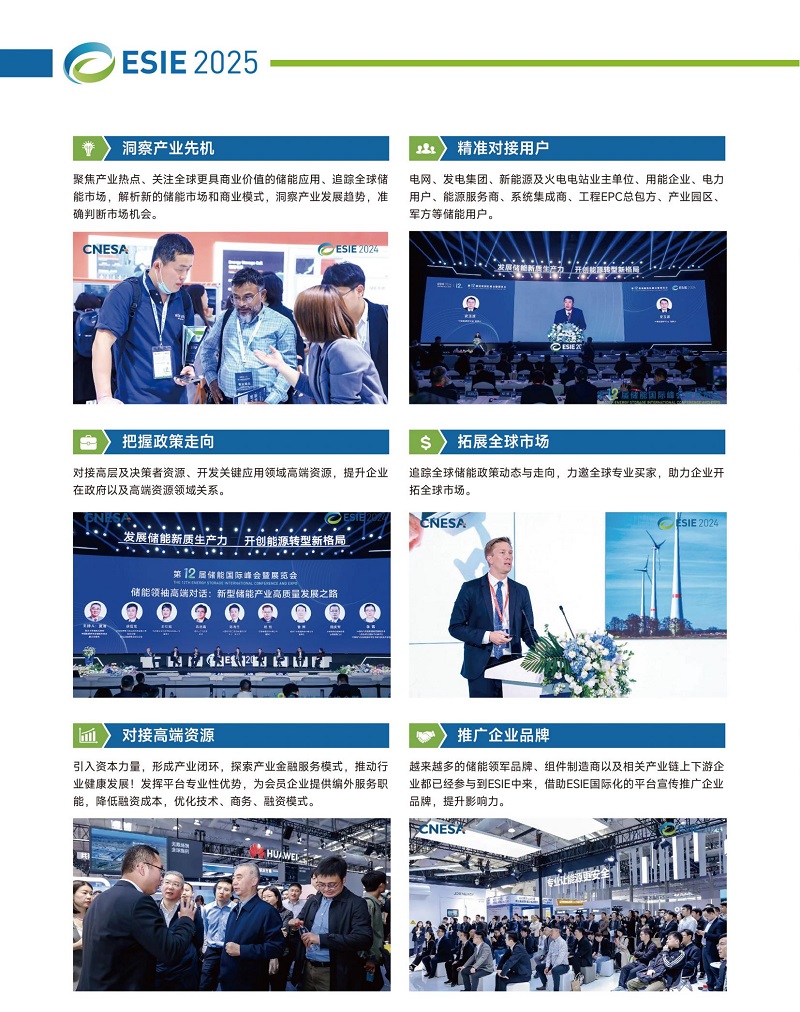
A Gathering of Government, Industry, Academia, and Research Leaders At the opening ceremony, leaders from government agencies—including Shi Yubo, Chairman of the China Energy Research Association; Bian Guangqi, Deputy Director-General of the Department of Energy Conservation and Science & Technology Equipment at the National Energy Administration; Zhou Haiyan, Second-Level Inspector of the Electronic Information Department at the Ministry of Industry and Information Technology; and Meng Qingqiang, Chief Engineer of State Grid Corporation of China—delivered remarks. Meanwhile, more than ten academicians from the Chinese Academy of Sciences and the Chinese Academy of Engineering, including Yang Yusheng, Zhou Xiaoxin, Sun Shigang, He Yaling, Zhao Tianshou, and Ding Yulong, spearheaded the “8th Frontier Technology Conference on Energy Storage,” sharing insights into cutting-edge trends in solid-state batteries, long-duration energy storage, flow batteries, and other emerging technologies.
Major Policy Signals and Industry Milestones Unveiled The National Energy Administration outlined its next steps, emphasizing four key areas: strengthening forward-looking planning, providing robust support for technological innovation, guiding rational resource allocation, and fostering healthy industrial development. It also announced accelerated efforts to advance the electricity spot market and refine trading mechanisms within the ancillary services market. The Ministry of Industry and Information Technology underscored the need to reinforce regulatory frameworks for the lithium‑battery sector, encouraging faster technological progress and transformation across the energy‑storage value chain. State Grid disclosed that, as of the end of 2024, the installed capacity of new‑type energy storage within its operating area had reached 58.6 GW/137.9 GWh. Chen Haisheng, Chairman of the China Energy Storage Alliance, released the “2025 White Paper on Energy Storage Industry Research,” systematically reviewing the latest advancements in China’s energy‑storage technologies and related industries. Additionally, the V2.0 version of the Lithium‑Battery Carbon Footprint Database was officially launched during the event.
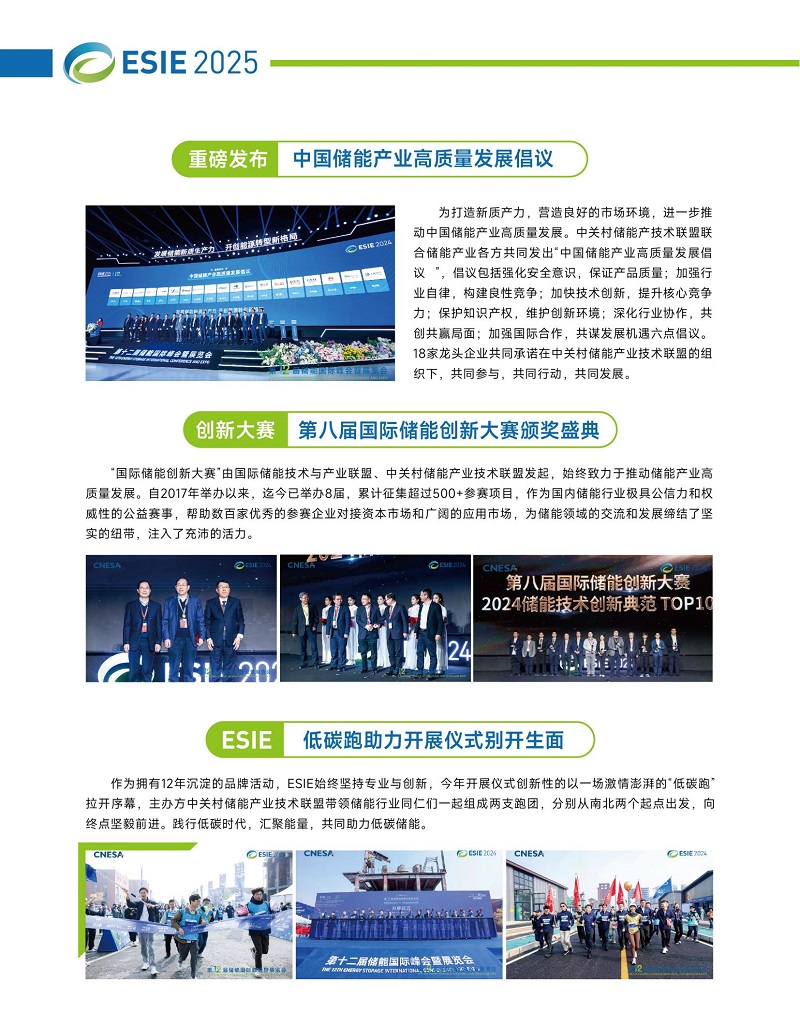
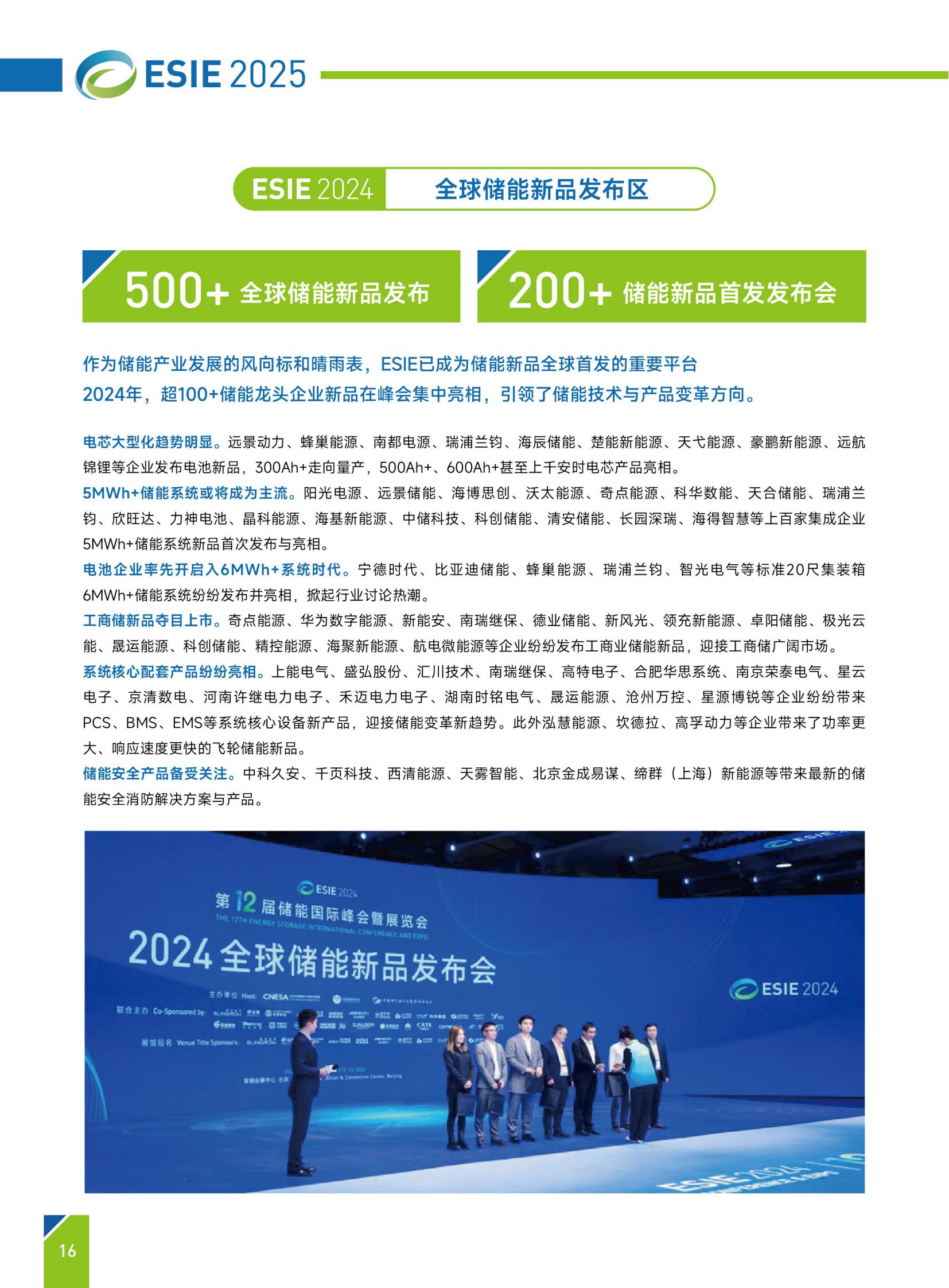
A Flourishing Landscape of Technological Innovation Centered around the theme of “Technological Innovation and Development,” the exhibition featured the “Energy Storage Design and Solutions Forum,” highlighting the latest breakthroughs in battery technology, grid‑connected energy storage, system integration, and digital‑intelligence applications. Six national-level industry–education–research integration platforms made their debut at the show, promoting deep collaboration among academia, industry, and end-users. Leading companies such as Kehua Digital Energy, Sungrow Power Supply, Xin Yuan Intelligent Storage, and Haibosichuang unveiled intelligent energy management systems that seamlessly integrate AI and big data, demonstrating transformative innovations—from “energy storage as a foundation” to “digital intelligence empowerment.”
High‑Level Dialogues Among Energy‑Storage Leaders Shape Industry Perspectives The “ESIE 2025 High‑Level Dialogue Among Energy‑Storage Leaders,” moderated by Professor Xia Qing of Tsinghua University, brought together eight top experts and corporate executives from Vision Energy, CRRC Zhuzhou Institute, Soaring Electric, Chune New Energy, and other industry giants. They engaged in an in-depth discussion on “the opportunities and challenges posed by the full marketization of new energy sources for emerging energy storage technologies,” offering diverse perspectives on strategies and directions for the energy‑storage sector amid the wave of new‑energy market reforms.
ESIE 2027 Venue Map
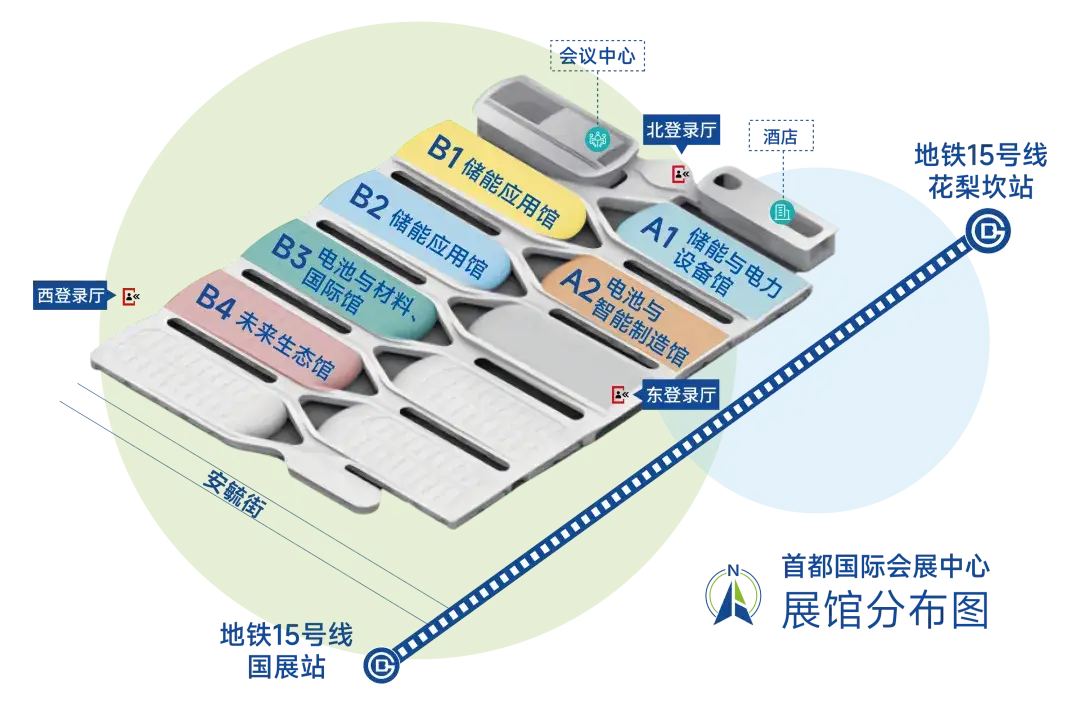
ESIE Exhibitior List
Beijing International Energy Storage Exhibition – Beijing Energy Storage Summit Range
- Compressed Air Energy Storage ,
- Flywheel Energy Storage ,
- Pumped Hydro Storage ,
- Lithium-Ion Batteries ,
- Solid-State Batteries ,
- Flow Batteries ,
- All-Vanadium Redox Flow Batteries ,
- Zinc-Bromine Flow Batteries ,
- Lead-Acid Batteries ,
- Lead-Carbon Batteries ,
- Sodium-Sulfur Batteries ,
- Aqueous Sodium-Ion Batteries ,
- Next-Generation Batteries ,
- Nickel-Metal Hydride Batteries ,
- Hydrogen-Based Energy Storage ,
- Fuel Cells ,
- Thermal/Cold Energy Storage ,
- Molten Salt Thermal Storage ,
- Supercapacitors ,
- Superconducting Energy Storage
- IGBT ,
- Power Modules ,
- Energy Storage Inverters (PCS) ,
- Energy Storage Cells and PACKs ,
- Battery Management Systems (BMS) ,
- Energy Management Systems (EMS) ,
- Energy Storage Fire Protection Equipment ,
- Battery Thermal Management ,
- Monitoring and Early Warning Systems ,
- Fire Prevention Devices ,
- Electrical Fire Monitoring ,
- DC Insulation Testing ,
- Energy Storage Containers ,
- Distribution Equipment ,
- Switchgear Cabinets ,
- Cables ,
- AC/DC Switches ,
- Contactors ,
- Connectors ,
- AC/DC Meters ,
- Distributed Control Systems (DCS) ,
- Remote Terminal Units (RTUs) ,
- Heat Exchanger Equipment ,
- Industrial Controllers ,
- Complete Energy Storage Systems ,
- Residential Energy Storage Products ,
- Integrated Commercial and Industrial Energy Storage Cabinets ,
- Mobile Energy Storage Vehicles
- Distributed Energy and Energy Storage Systems ,
- Microgrids ,
- User-Side Energy Storage ,
- Residential Energy Storage Systems ,
- Military Energy Storage Systems ,
- Energy Storage Systems for Areas Without Electricity ,
- Centralized Renewable Energy Generation Systems ,
- Grid-Side Large-Scale Energy Storage Systems ,
- Grid-Connected Inverters ,
- Peak-Shaving Power Plants ,
- Frequency Regulation Power Plants ,
- Combined Thermal–Electric Frequency Regulation Systems ,
- Energy Storage for Communication Base Stations ,
- Energy Recovery Systems for Rail Transit ,
- Data Center Power Supplies ,
- UPS Power Supplies ,
- Portable Power Sources
- Energy Network Operators ,
- Energy Network Developers ,
- Digital Energy Service Providers ,
- Information-Energy System Integrators ,
- Information-Energy Convergence Application Developers ,
- Energy Storage Information Network Software Development ,
- IoT Technologies ,
- Cloud Computing Technologies ,
- Mobile Internet ,
- Big Data ,
- Multi-Network Convergence Technologies ,
- Transmission Technologies and Equipment ,
- Access Equipment ,
- Optical Fiber Cables ,
- Industrial Ethernet ,
- Data Communication and Networking Technologies and Related Products
- Three-Waste Treatment Equipment for the Battery Industry ,
- Technologies and Equipment for Recycling and Processing Waste Batteries ,
- Battery Residual Value Assessment Equipment ,
- Technologies for Second-Life Applications of Power Batteries ,
- Battery Evaluation Systems
- Various Energy Storage Battery Testing Instruments ,
- Equipment Protection ,
- Intelligent Assessment and Diagnostic Technologies
- Charging Piles ,
- Charging Stations ,
- Charging Station Distribution Equipment ,
- Parking Lot Charging Facilities ,
- Smart Monitoring Equipment ,
- Electric Vehicle Charging, Storage, and Battery Swapping Stations ,
- Vehicle-Electricity Interconnection ,
- Photovoltaic–Storage–Charging Integrated Solutions
- Photovoltaic Systems and Component Equipment ,
- Wind Power Systems and Component Equipment ,
- Lightweight DC Equipment ,
- Operational Monitoring Devices ,
- Grid Connection Control Systems ,
- Flexible Transmission Equipment ,
- Ultra-High Voltage Transmission Equipment ,
- High-Temperature Superconducting Equipment ,
- High-Temperature Superconducting Cables ,
- Distribution Automation Systems and Protective Devices ,
- Smart Switchgear ,
- Transformers ,
- Current Transformers ,
- Smart Components ,
- Digital Substations ,
- Substation Comprehensive Automation ,
- Distribution Network Automation Devices ,
- Transmission and Distribution Online Monitoring ,
- Fault Diagnosis and Self-Healing Devices ,
- Power Quality Monitoring ,
- Superconducting Electrical Engineering Technologies ,
- Various New Types of Wires and Cables ,
- Composite Materials ,
- Safety Protections
- Industrial Energy-Saving Energy Storage Technologies ,
- Photovoltaic–Thermal Combined Production ,
- Gas-Fired Heating, Cooling, and Power Combined Production ,
- Gas-Fired Distributed Generation Systems ,
- Clean Heating Systems ,
- Energy Storage and Integrated Energy Services
Booth Sales

Mr LiuGold-Medal PM
3 Years Booth Sales
2027 Beijing City Energy Storage Ticket Sales

Mr. HanGold-Medal PM
3 Years Booth Sales

Ms. LiuGold-Medal PM
3 Years Booth Sales
Beijing City Energy Storage Venue
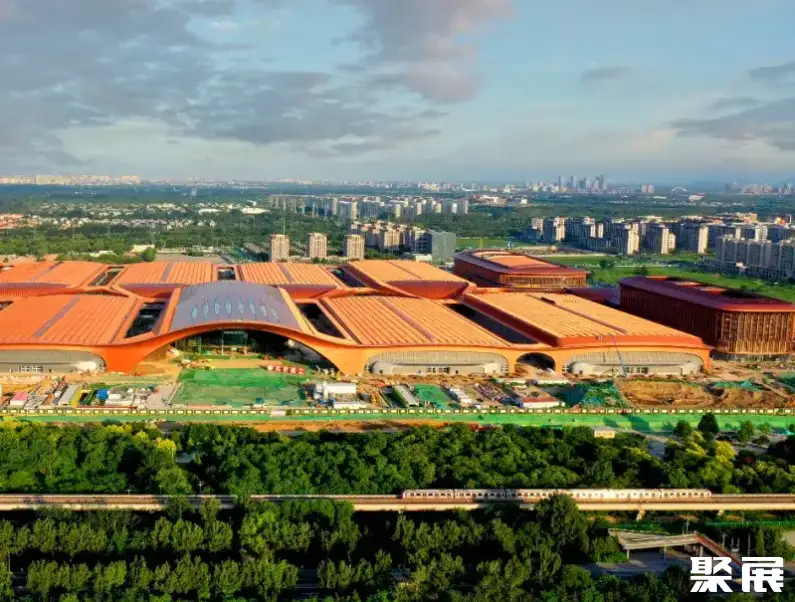
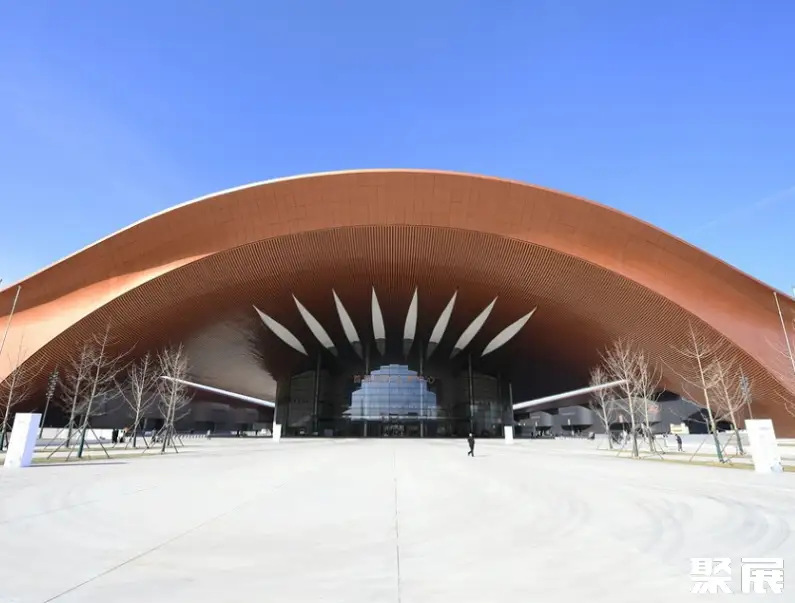
Beijing City Energy Storage Booth Price
Process
- 1.Submit the business license of the company
- 2.Submit product picture and name
- 3.Receive exhibition presentation documents and booth drawings
- 4.Submit booth application form/Sign booth contract
- 5.Pay the contract booth deposit
- 6.Prepare for exhibition